
Selling vs. Storytelling
Why One Pushes, the Other Pulls
PERSPECTIVE
2/7/20261 min read
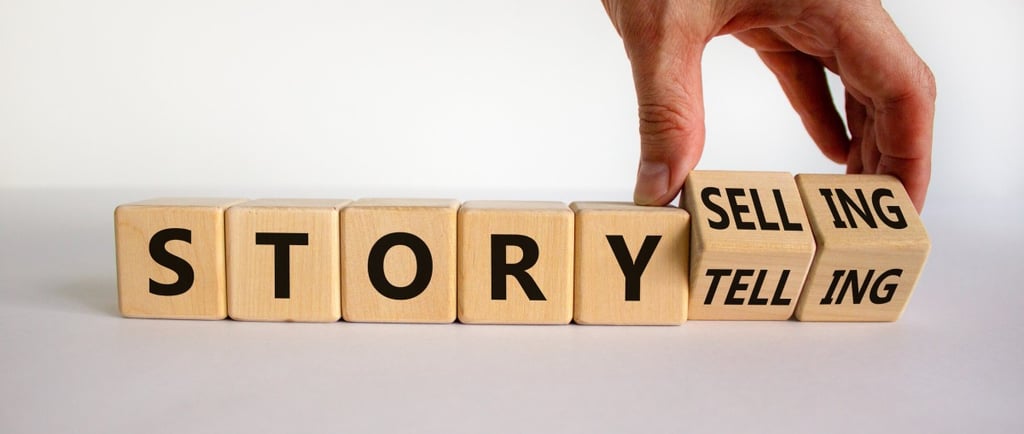

Selling vs. Storytelling: Why One Pushes, the Other Pulls
Most companies believe they are selling a product.
In reality, they are selling relief from uncertainty.
Selling focuses on features, specs, and price.
Storytelling focuses on meaning, context, and belief.
That difference decides whether people lean in — or scroll past.
Imagine a company selling a premium noise-cancelling headphone.
Selling sounds like this:
“Industry-leading noise cancellation, 40-hour battery life, adaptive sound technology, and superior audio quality.”
All impressive.
All forgettable.
Now watch what happens with storytelling.
Storytelling sounds like this:
“Your day is full of noise — meetings, messages, alerts, expectations. You rarely get a moment where you can think clearly. This isn’t about better sound. It’s about creating a space where the world finally quiets down.”
Same product.
Different entry point.
The story doesn’t start with the headphones.
It starts with the life people are already living.
-Selling answers “what is it?”
-Storytelling answers “why does this matter to me?”
People don’t buy features.
They buy the feeling of regaining control, focus, or calm.
The product becomes meaningful only when it’s placed inside a story the customer recognises as their own.
Selling competes on comparison.
Storytelling competes on interpretation.
Anyone can copy specs.
Few can own the narrative.
When customers start describing your product using your language, you’ve moved beyond selling.
You’ve shaped how they see the problem.
In saturated markets, clarity creates gravity.
The strongest products don’t explain more.
They explain better.
They don’t ask: “How do we sell this feature?”
They ask: “What tension in our customers’ lives does this resolve?”
Because when the story is clear,
the product doesn’t need persuasion.
It earns its place.