
Monzo’s Driving Force: The Orange Card
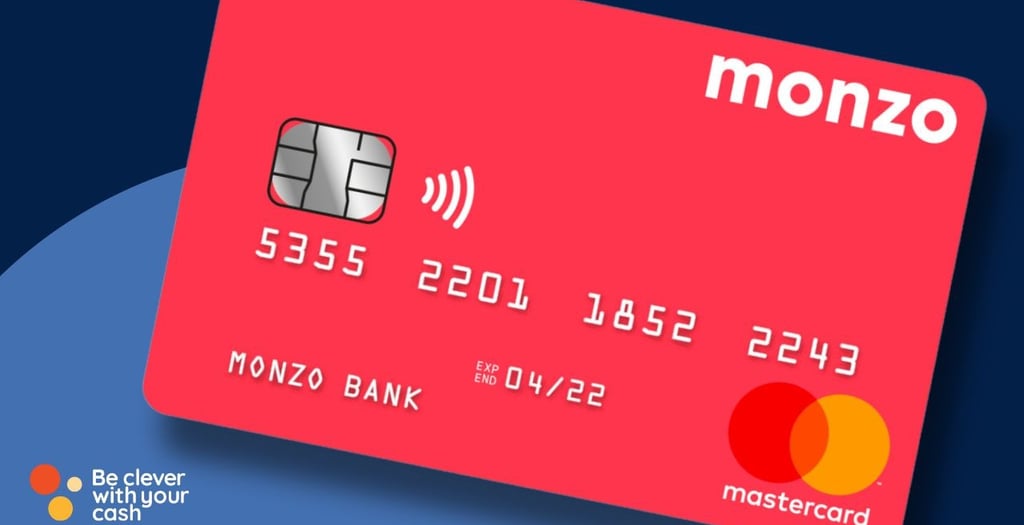
How a simple design detail helped build a brand with over 13 million users Imagine a brand story with no huge advertising budgets, no aggressive marketing campaigns, and no traditional banking legacy. Just one card colour… and the willingness to listen to instinctive customer reactions. Monzo’s story began exactly like this.
INSPIRING STORIES
12/5/20253 min read
Monzo’s Driving Force: The Orange Card
How a simple design detail helped build a brand with over 13 million users...
Imagine a brand story with no huge advertising budgets, no aggressive marketing campaigns, and no traditional banking legacy. Just one card colour… and the willingness to listen to instinctive customer reactions.
Monzo’s story began exactly like this.
2016: A Card Test, a Small Focus Group, and an Unexpected Signal
When Monzo’s founders organised a small focus group to test their first card designs, their aim was purely aesthetic. They were choosing between several colours: navy blue, dark grey, orange, and a few others.
The orange (coral) card was not even a serious candidate internally.
It was selected simply so it would “stand out visibly during testing.”
But the moment users held the card in their hands, everything changed:
“This card never gets lost in my wallet.”
“You can spot it instantly at the tube turnstiles.”
“The colour is cool, striking and modern.”
“It doesn’t look like a traditional bank card — it feels younger and more energetic.”
And the most powerful feedback of all:
“This card feels like it represents me.”
When the founders reviewed the feedback, they realised that a simple design choice had triggered a sense of identity and belonging. That’s how the strategic pivot began.
The Pivot: Orange Wasn’t Just a Colour — It Became Monzo’s Identity
The Monzo team quickly understood that this wasn’t just an aesthetic preference — it reflected something deeper:
Users enjoyed showing the card.
It drew attention in social settings and sparked conversations.
People began referring to Monzo as “the bank with the orange card.”
The team made a rapid decision:
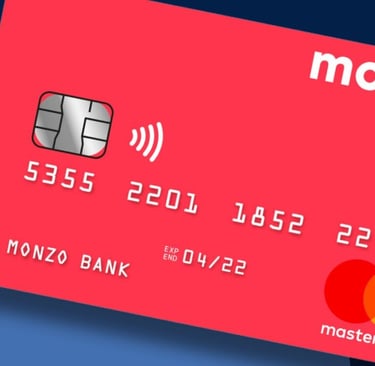
👉 The orange card would become the centrepiece of Monzo’s brand identity.
This colour evolved into a visual manifesto — symbolising the contrast between old-school banking and a new generation of financial services.
The Hidden Engine Behind Monzo’s Viral Growth
While most digital banks spent millions on advertising, Monzo’s strongest marketing channel became its customers.
When someone used the card on the underground, people asked:
“Which bank is that?”
Paying at a café, the barista would say:
“I’ve seen this card everywhere lately.”
In social gatherings, when the card was placed on the table:
“What’s that? I want one too.”
The colour sat at the heart of Monzo’s visibility strategy.
A truly organic, behaviour-driven growth loop emerged — entirely advertising-free.
A simple brand element became a viral mechanism embedded in daily life.
2020–2025: The Card Colour That Helped Build a Real Bank
After 2020, Monzo’s growth accelerated dramatically.
By 2025:
Monzo had over 13 million customers.
That’s roughly 20% of the UK adult population.
Its 2025 annual revenue reached approximately £1.2 billion.
Monzo is now one of the fastest-growing financial brands in the UK.
Beyond the card colour, Monzo set a new category in fintech through user-centric features, transparency, real-time notifications, and standout product design.
And the spark of this entire journey was that small test back in 2016.
Upgrovia Insights
1. A “small signal” often opens the door to a “big insight.”
The orange card looked like a minor detail — yet in marketing, the strongest ideas often form from micro-signals.
2. Branding is not just a logo — it is a behaviour trigger.
If people want to show your product, you unlock free, organic growth.
3. User feedback is the primary compass of strategy.
Monzo correctly interpreted emotional, behavioural and social cues.
4. Customer validation can build not just a product, but an entire brand identity.
5. Visual differentiation creates exponential impact in crowded markets.
Fintech was dominated by greys, blues and blacks.
Monzo introduced a bright, visible, memorable category.
6. Brand affinity is more valuable than traditional advertising spend.
Millions in TV ads wouldn’t have delivered the same effect.
👉 Understanding not just what customers choose — but why they choose it — is the ultimate competitive advantage.